Jul 24 2026

Ojibway Song

Published by under Poetry

Ojibway Song
by Ojibway (Anonymous)

English version by Ivan M. Granger

Sometimes
      I go about pitying myself.

Yet all the while
      I am carried by winds
      across the sky.

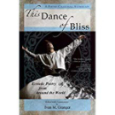
— from This Dance of Bliss: Ecstatic Poetry from Around the World, Edited by Ivan M. Granger


/ Image by ahermin /

Usually, all it takes is a shift in perspective.

We frequently feel hurt or angry or sad or just trapped. The common response, especially in our task-oriented modern era, is to decide what we are going to do about it. We try to take charge. We act, we do, we fix. And, yes, that approach can be useful in many circumstances.

But we need to make sure we don’t ‘do’ as a way to avoid feeling. Frequently we have an impulse toward action because, otherwise, we will have to feel, and what we actually feel may not be pleasant or contained. But if we don’t feel fully, some part of ourselves has been shut down, separated from the whole, and our field of perception has narrowed.

That’s the other reason not to rush to action. ‘Doing’ can become a way to reinforce our limited ideas about reality. Action is like a ritual, it makes everything feel more real, more imprinted in the mind. This can be a good thing or it can be a trap. It depends on whether or not we are seeing clearly.

In any situation, the first thing to do is to not do anything. Instead, we should first allow our perspective to shift. We must see what we see. This is the most potent act possible. Seemingly doing nothing, all of reality changes. The willingness to step aside from our own internal dramas allows us to recognize and utilize the great currents already flowing soundlessly through our lives. Then, in harmony with that underlying momentum, should we choose to act, our actions have a power and purpose, bringing extraordinary results.

We soar, we dance, we are carried by winds across the sky.


Recommended Books: Ojibway (Anonymous)

The Essential Mystics: Selections from the World’s Great Wisdom Traditions The Path of the Rainbow: An Anthology of Songs and Chants From the Indians of North America


Ojibway (Anonymous)

US (19th Century) Timeline
Primal/Tribal/Shamanic : American Indian

Continue Reading »

2 responses so far

Jul 24 2026

Remember gratitude

Remember gratitude.

No responses yet

Jul 10 2026

Dorothy Walters – They Speak

They Speak
by Dorothy Walters

They speak of enlightenment.

Can darkness
dispel Darkness?
light illumine Light?

O, My Invisible,
you and I know the secret ways.

— from The Ley Lines of the Soul: Poems of Ecstasy and Ascension, by Dorothy Walters


/ Image by Ricardo Gomez Angel /

A short one today from my beloved friend Dorothy Walters who passed away just a few years ago.

Dorothy and I connected in the early 2000s, around the time I started the Poetry Chaikhana as a website, and she was first blogging about her experiences of spiritual opening. She reached out to me and we began a correspondence. Not long after, she moved back to Boulder, Colorado, where she had lived and taught for many years previously, and where I was also living at the time. So we had the opportunity to meet regularly for brunches, laughter, discussions of poetry, and the movements of spirit in our lives.

We were in different phases of life. She was already retired and several decades my senior. Now, many years later, as I approach 60 and begin to imagine my own elder years, I look back upon my time and friendship with Dorothy as a source of inspiration, a template of sorts for how I might integrate the outpourings from the inner world with a still active outer life.

It’s a question most of us deal with at one level or another. What is the ideal work-life balance? Of course, work is not somehow separate from or contrary to our life. For most of us, it’s a hugely important aspect of our lives. But what is that inner-outer balance?

In some ways, this question is up for me more than it has been at any other point in my life. For much of my adult life, I’ve tended to view my work as a necessary chore, necessary to my life role, but always secondary. Spirituality, poetry, my immediate relationships were always primary in my mind. Interestingly, work has become more prominent in recent months for me. This is why the Poetry Chaikhana emails have been less frequent. I’ve been particularly busy with my work as a computer programmer. Right now, I’m especially focused on preparing for an upcoming conference.

While many around my age are perhaps winding down their work energies, my work focus is ramping up. It’s both enlivening and challenging to feel more engaged in the outer expressions of my life. It brings me back to that question of inner life, outer life, how to be fully engaged in an active outer life while remaining well-centered in a vibrant inner life. Some days that conscious integration, acting on all those levels in a balanced way simultaneously, seems effortful, perhaps beyond my immediate capacity. Then, on other days, I’m naturally in the flow and I don’t see a real separation; even the outer life is really just a further expression of that radiance within.

So I come back to the words of this poem by Dorothy. Can… light illumine light? It’s all there radiant at every level right now. Do I need to add effort in order to integrate things? Or do I simply need to remember to pause and see that it is already all illuminated?

We’ll see in the coming years how this plays out in my life. How prominent will my work remain? Will I eventually shift my activities more to something similar to what Dorothy did late in her life, meeting with circles of people on the spiritual journey, lovers of the arts and poetry, hoping to be a gentle light that inspires others? Dorothy spent most of her life teaching others, so sitting in on small social groups felt natural to her. I’ve tended to be a quiet, rather private, individual. So perhaps my pathway will be different. Or perhaps through my evolving work activities, I’m cultivating new qualities and skills that will lead to my own unique ways of connecting and sharing in my later years. We shall see. I am curious. I remain open.

you and I know the secret ways.

Have a beautiful day!


Recommended Books: Dorothy Walters

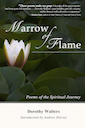
The Longing in Between: Sacred Poetry from Around the World (A Poetry Chaikhana Anthology) This Dance of Bliss: Ecstatic Poetry from Around the World Marrow of Flame : Poems of the Spiritual Journey The Ley Lines of the Soul: Poems of Ecstasy and Ascension Diamond Cutters: Visionary Poets in America, Britain & Oceania
More Books >>


Dorothy Walters, Dorothy Walters poetry, Secular or Eclectic poetry Dorothy Walters

US (1928 – 2023) Timeline
Secular or Eclectic

Continue Reading »

3 responses so far

Jul 10 2026

discovery

All exploration
is self-discovery.

No responses yet

Jun 12 2026

Symeon the New Theologian – We awaken in Christ’s body

Published by under Poetry

We awaken in Christ’s body
by Symeon the New Theologian

English version by Stephen Mitchell

We awaken in Christ’s body
as Christ awakens our bodies,
and my poor hand is Christ, He enters
my foot, and is infinitely me.

I move my hand, and wonderfully
my hand becomes Christ, becomes all of Him
(for God is indivisibly
whole, seamless in His Godhood).

I move my foot, and at once
He appears like a flash of lightning.
Do my words seem blasphemous? — Then
open your heart to Him

and let yourself receive the one
who is opening to you so deeply.
For if we genuinely love Him,
we wake up inside Christ’s body

where all our body, all over,
every most hidden part of it,
is realized in joy as Him,
and He makes us, utterly, real,

and everything that is hurt, everything
that seemed to us dark, harsh, shameful,
maimed, ugly, irreparably
damaged, is in Him transformed

and recognized as whole, as lovely,
and radiant in His light
he awakens as the Beloved
in every last part of our body.

— from The Enlightened Heart: An Anthology of Sacred Poetry, by Stephen Mitchell


/ Image by Mads Schmidt Rasmussen /

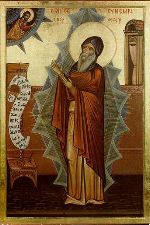
I have been rereading John Anthony McGuckin’s The Book of Mystical Chapters, which is a selection of short poems and insights, many of them from the desert fathers and other voices from the rich Eastern Orthodox tradition — beautiful little meditations. And one of the visionaries highlighted repeatedly is Symeon the New Theologian. Despite my Russian name, I was not raised in Orthodox Christianity myself, but I have really come to appreciate many of these profound mystics, perhaps most especially Symeon the New Theologian. This is one of my favorite poems by Symeon the New Theologian.

Symeon doesn’t urge us to merely honor or love the Beloved (Christ within the Christian tradition) from a distance. We melt into the Divine, become one with the Divine, share the same body.

I move my hand, and wonderfully
my hand becomes Christ, becomes all of Him

Some of these lines remind me of a poem often inaccurately attributed to Teresa of Avila, You Are Christ’s Hands with it’s lines– “Christ has no body now on earth but yours, / no hands but yours…”

This poem by Symeon is one I just want to drink in — it feels so deeply healing and generous to the soul.

and everything that is hurt, everything
that seemed to us dark, harsh, shameful,
maimed, ugly, irreparably
damaged, is in Him transformed

and recognized as whole, as lovely,
and radiant in His light
he awakens as the Beloved
in every last part of our body.

Have a beautiful day discovering the Beloved within.


Recommended Books: Symeon the New Theologian

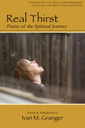
The Longing in Between: Sacred Poetry from Around the World (A Poetry Chaikhana Anthology) This Dance of Bliss: Ecstatic Poetry from Around the World Real Thirst: Poetry of the Spiritual Journey The Enlightened Heart: An Anthology of Sacred Poetry The Book of Mystical Chapters: Meditations on the Soul’s Ascent from the Desert Fathers and Other Early Christian Contemplatives
More Books >>


Symeon the New Theologian, Symeon the New Theologian poetry, Christian poetry Symeon the New Theologian

Turkey (949 – 1032) Timeline
Christian : Eastern Orthodox

Continue Reading »

One response so far

Jun 12 2026

The awakened heart

The awakened heart
is the true church.

No responses yet

Jun 01 2026

Kahlil Gibran – The Vast Man

Published by under Poetry

The Vast Man
by Kahlil Gibran

But sweeter still than laughter and greater than longing came to me.
It was the boundless in you;
The vast man in whom you are all but cells and sinews;
He in whose chant all your singing is but a soundless throbbing.
It is in the vast man that you are vast,
And in beholding him that I beheld you and loved you.
For what distances can love reach that are not in that vast sphere?
What visions, what expectations and what presumptions can outsoar that flight?
Like a giant oak tree covered with apple blossoms is the vast man in you.
His might binds you to the earth, his fragrance lifts you into space, and in his durability you are deathless.

— from The Prophet, by Kahlil Gibran


/ Image by Joshua Earle /

I know the poem emails have been irregular in recent months. My work as a computer programmer has been especially busy this year, and I am still figuring out how to balance that with my poetry work. So, since I missed the last few Fridays, I thought I’d send a rare Monday poem to you. And, as I was somewhat randomly going through my library, I was reminded of this treasure by the great Kahlil Gibran.

It is in the vast man that you are vast

I can write a long commentary, line by line, about how this lovely poem maps beautifully to the deep experiences of stillness and settling into the true Self. But I feel inclined to let the poem sing to us instead — quietly, yet the melody comes through.

This is the way, the stillness that leads us to the vast man — or woman — the vast self. This is the immense being we all are, all-encompassing, all-embracing, in which the little self is made whole and more than whole in the grand unity that is the web of which we are a part. Through this one we know ourselves as we come to know ourselves in others and in all that surrounds us and all that lives and breathes and aspires and grows.

Like a giant oak tree covered with apple blossoms is the vast man in you.
His might binds you to the earth, his fragrance lifts you into space, and in his durability you are deathless.

Have a beautiful day!


Recommended Books: Kahlil Gibran

The Prophet The Beloved: Reflections on the Path of the Heart Broken Wings Jesus the Son of Man Kahlil Gibran: His Life & World
More Books >>


Kahlil Gibran, Kahlil Gibran poetry, Christian poetry Kahlil Gibran

Lebanon/US (1883 – 1931) Timeline
Christian
Secular or Eclectic

Continue Reading »

One response so far

Jun 01 2026

just selfish enough

Be just selfish enough
to insist on what is
spiritually important to you.

One response so far

May 15 2026

Emily Dickinson – I’m ceded

Published by under Poetry

I’m ceded–I’ve stopped being Theirs
by Emily Dickinson

I’m ceded–I’ve stopped being Theirs–
The name They dropped upon my face
With water, in the country church
Is finished using, now,
And They can put it with my Dolls,
My childhood, and the string of spools,
I’ve finished threading–too–

Baptized, before, without the choice,
But this time, consciously, of Grace–
Unto supremest name–
Called to my full–The Crescent dropped–
Existence’s whole Arc, filled up,
With one small Diadem.

My second Rank–too small the first–
Crowned–Crowing–on my Father’s breast–
A half unconscious Queen–
But this time–Adequate–Erect,
With Will to choose, or to reject,
And I choose–just a Crown–

— from Women in Praise of the Sacred: 43 Centuries of Spiritual Poetry by Women, Edited by Jane Hirshfield


/ Image by live-showtime /

I believe this poem belongs among the great enlightenment poems. At the same time its words pointedly cut at religious convention.

Something has happened. Something that makes Emily Dickinson erupt from the opening lines, fiercely asserting that she is “ceded,” that she has “stopped being Theirs.” This is a proclamation of supreme yielding or dying to oneself that is also her escape into freedom.

She no longer has use for “The name They dropped upon my face” when she was baptized. That name is now something that she has set aside with other childish things. Not just set aside, it has fallen away. Her social identity, the person “They” call Emily has ceased to exist. She has discovered herself to be something larger, more essential, more true. She has exploded into an identity so immense and all-encompassing that it is the “supremest name” — the Ultimate, the Absolute. She has been “Called to my full,” a state of awareness in which “Existence’s whole Arc” is “filled up.”

But also notice the iconoclastic way she refers to baptism. The first baptism was a baptism given to her “without the choice” and imposes upon her a name that is “too small,” that must be grown out of and abandoned. She implies that that first baptism initiated her into the social world, not the spiritual one. That name that “They dropped upon my face” had trapped her, making her “Theirs,” somehow controlled and contained by societal conventions represented by the “country church.” She contrasts this with being “Crowned,” a second baptism, but one received inwardly, “consciously, of Grace.” She implies that this second baptism is the real anointing that gives true freedom, not the baptism she received as a child. For much of the Christian world that is a dangerous assertion even today, a century and a half later. Her words challenge fellow Christians to seek the inner anointing, of which the outer baptism is a reflection.

The last line particularly grabs my attention, “And I choose–just a Crown–” Rather than choosing (or rejecting) a new name or renewed social ego, she possesses the clarity and “Will” to choose instead to reside in the immensity of this “supremest name.” What else needs to be said?


Recommended Books: Emily Dickinson

The Longing in Between: Sacred Poetry from Around the World (A Poetry Chaikhana Anthology) The Complete Poems of Emily Dickinson This Dance of Bliss: Ecstatic Poetry from Around the World Women in Praise of the Sacred: 43 Centuries of Spiritual Poetry by Women The Enlightened Heart: An Anthology of Sacred Poetry
More Books >>


Emily Dickinson, Emily Dickinson poetry, Secular or Eclectic poetry Emily Dickinson

US (1830 – 1886) Timeline
Secular or Eclectic
Christian : Protestant

Continue Reading »

One response so far

May 15 2026

these are enough

Opening, seeing, and serving,
these are enough.

No responses yet

May 08 2026

Rumi – Today, like every other day

Published by under Poetry

Today, like every other day, we wake up empty
by Mevlana Jelaluddin Rumi

English version by Coleman Barks

Today, like every other day, we wake up empty
and frightened. Don’t open the door to the study
and begin reading. Take down the dulcimer.

Let the beauty we love be what we do.
There are hundreds of ways to kneel and kiss the ground.

— from Open Secret: Versions of Rumi, Translated by Coleman Barks / Translated by John Moyne


/ Image by https://unsplash.com/@lovestephaniegreene /

Each time I come across this short selection by Rumi I read it slightly differently. It’s one of those magical, enigmatic poems that suggests something new each time your own perspective and circumstance change.

Every time we feel our lives or the world has become frightening, overwhelming, chaotic, it’s natural to want to reestablish control through thought, as if by getting just the right concepts and mental framing life will behave just as we think it should.

Don’t open the door to the study
and begin reading. Take down the dulcimer.

Or we can open. We can find a natural flow and discover the beauty that is right here regardless of the mess.

Let the beauty we love be what we do.
There are hundreds of ways to kneel and kiss the ground.

Have a beautiful day!


Recommended Books: Mevlana Jelaluddin Rumi

The Longing in Between: Sacred Poetry from Around the World (A Poetry Chaikhana Anthology) This Dance of Bliss: Ecstatic Poetry from Around the World Poetry for the Spirit: Poems of Universal Wisdom and Beauty Music of a Distant Drum: Classical Arabic, Persian, Turkish & Hebrew Poems Perfume of the Desert: Inspirations from Sufi Wisdom
More Books >>


Mevlana Jelaluddin Rumi, Mevlana Jelaluddin Rumi poetry, Muslim / Sufi poetry Mevlana Jelaluddin Rumi

Afghanistan & Turkey (1207 – 1273) Timeline
Muslim / Sufi

Continue Reading »

2 responses so far

May 08 2026

pregnant with miracles

The world is pregnant with miracles.
All it takes is for us to approach with quiet and awe,
and the most mundane things open themselves
into infinities.

No responses yet

May 01 2026

Wendell Berry – The Real Work

Published by under Poetry

The Real Work
by Wendell Berry

It may be that when we no longer know what to do
we have come to our real work,

and that when we no longer know which way to go
we have come to our real journey.

The mind that is not baffled is not employed.

The impeded stream is the one that sings.

— from Standing by Words: Essays, by Wendell Berry


/ Image by myINQI /

I know the Poetry Chaikhana emails haven’t been keeping to their regular weekly schedule recently. My computer work has been especially active in the last few months. And, of course, the chaos playing out on the world stage cries out for a healing presence. So the poetry comes when the day allows. But you, and the world of poetry, are very much in my mind each week regardless.

Now to the poem…

=

Oh, I just like this, don’t you? As I get older and encounter more of the world and more of myself, I grow increasingly wary of answers. It’s the questions that awaken the soul.

The mind that is not baffled is not employed.

Berry is reminding us that struggle and confusion — and wonder! — are signs that we are on a good path, that we are paying attention, that we are still seeking and discovering, that we are alive. The scariest people are those who’ve grown tired of questions and so brutalize the world with simple answers.

Okay, a poetic confession: This was not originally a poem in verse. I did a bit of research and found that this is actually an excerpt from one of Wendell Berry’s essays that someone later versified. It’s been circulating as a poem ever since. I guess you can’t trap a good poet in prose for long. My apologies to the poetry purists out there.

Now, let’s discover a new path through this magical, unknown day…


Recommended Books: Wendell Berry

The Collected Poems of Wendell Berry, 1957-1982 Given: Poems Selected Poems of Wendell Berry A Timbered Choir: The Sabbath Poems 1979-1997 The Mad Farmer Poems
More Books >>


Wendell Berry, Wendell Berry poetry, Secular or Eclectic poetry Wendell Berry

US (1934 – )
Secular or Eclectic

More poetry by Wendell Berry

2 responses so far

May 01 2026

Every single person

Take no one for granted.

Every single person
is a universe of being.

No responses yet

Apr 03 2026

Maya Angelou – On the Pulse of Morning

Published by under Poetry

On the Pulse of Morning
by Maya Angelou

A Rock, A River, A Tree
Hosts to species long since departed,
Mark the mastodon.
The dinosaur, who left dry tokens
Of their sojourn here
On our planet floor,
Any broad alarm of their hastening doom
Is lost in the gloom of dust and ages.

But today, the Rock cries out to us, clearly, forcefully,
Come, you may stand upon my
Back and face your distant destiny,
But seek no haven in my shadow.
I will give you no hiding place down here.

You, created only a little lower than
The angels, have crouched too long in
The bruising darkness,
Have lain too long
Face down in ignorance.
Your mouths spelling words
Armed for slaughter.

The rock cries out today, you may stand on me,
But do not hide your face.

Across the wall of the world,
A river sings a beautiful song,
Come rest here by my side.

Each of you a bordered country,
Delicate and strangely made proud,
Yet thrusting perpetually under siege.
Your armed struggles for profit
Have left collars of waste upon
My shore, currents of debris upon my breast.

Yet, today I call you to my riverside,
If you will study war no more.
Come, clad in peace and I will sing the songs
The Creator gave to me when I
And the tree and stone were one.
Before cynicism was a bloody sear across your brow
And when you yet knew you still
Knew nothing.

The river sings and sings on.

There is a true yearning to respond to
The singing river and the wise rock.
So say the Asian, the Hispanic, the Jew,
The African and Native American, the Sioux,
The Catholic, the Muslim, the French, the Greek,
The Irish, the Rabbi, the Priest, the Sheikh,
The Gay, the Straight, the Preacher,
The privileged, the homeless, the teacher.
They hear. They all hear
The speaking of the tree.

Today, the first and last of every tree
Speaks to humankind. Come to me, here beside the river.
Plant yourself beside me, here beside the river.

Each of you, descendant of some passed on
Traveller, has been paid for.

You, who gave me my first name, you
Pawnee, Apache and Seneca, you
Cherokee Nation, who rested with me, then
Forced on bloody feet, left me to the employment of
Other seekers–desperate for gain,
Starving for gold.

You, the Turk, the Swede, the German, the Scot…
You the Ashanti, the Yoruba, the Kru,
Bought, sold, stolen, arriving on a nightmare
Praying for a dream.

Here, root yourselves beside me.

I am the tree planted by the river,
Which will not be moved.

I, the rock, I the river, I the tree
I am yours–your passages have been paid.
Lift up your faces, you have a piercing need
For this bright morning dawning for you.

History, despite its wrenching pain,
Cannot be unlived, and if faced
With courage, need not be lived again.

Lift up your eyes upon
The day breaking for you.
Give birth again
To the dream.

Women, children, men,
Take it into the palms of your hands.
Mold it into the shape of your most
Private need. Sculpt it into
The image of your most public self.
Lift up your hearts.
Each new hour holds new chances
For new beginnings.

Do not be wedded forever
To fear, yoked eternally
To brutishness.

The horizon leans forward,
Offering you space to place new steps of change.
Here, on the pulse of this fine day
You may have the courage
To look up and out upon me, the
Rock, the River, the Tree, your country.

No less to Midas than the mendicant.
No less to you now than the mastodon then.

Here on the pulse of this new day
You may have the grace to look up and out
And into your sister’s eyes, into
Your brother’s face, your country
And say simply
Very simply
With hope
Good morning.

— from The Complete Collected Poems of Maya Angelou, by Maya Angelou


/ Image by particlem /

I have been away from the Poetry Chaikhana for a few weeks. As I was considering which poem to send out, I came across this one by Maya Angelou. Reading it this morning, I had that special experience of reading a poem I’ve ready many times before, but it was as if for the first time. I found myself thinking, What a stunning poem! Why hasn’t this been in my mind and heart all along? I think the poem was just waiting for me to catch up and be ready to receive it.

So here it is for you. Perhaps it has been waiting for you too…

Our history is in the earth, in rock and tree, our shared home. We stand upon our past. And that past speaks to us, calling us back to ourselves. History’s tears and terrors turn our hearts back to the peace that is every soul’s true nature. Seeing the past, acknowledging and accepting all of it, with head and heart engaged, that courageous act unblinds us. Only then are we freed to see distant horizons, and witness new dawns.

When you feel stuck, when the world feels stuck around you, take a moment to sit upon a rock, listen to a tree. They are yourself, and the selves of all who have gone before. They carry the collective wisdom of the eons.

A few of the lines that particularly stand out to me:

You, created only a little lower than
The angels, have crouched too long in
The bruising darkness…

Come, clad in peace and I will sing the songs
The Creator gave to me when I
And the tree and stone were one.

Today, the first and last of every tree
Speaks to humankind. Come to me, here beside the river.
Plant yourself beside me, here beside the river.

Lift up your faces, you have a piercing need
For this bright morning dawning for you.

Lift up your eyes upon
The day breaking for you.
Give birth again
To the dream.
Women, children, men,
Take it into the palms of your hands.
Mold it into the shape of your most
Private need. Sculpt it into
The image of your most public self.

Lift up your hearts.
Each new hour holds new chances
For new beginnings.

…And say simply
Very simply
With hope
Good morning.

Sending love to you all!

The horizon leans forward,
Offering you space to place new steps of change.


Recommended Books: Maya Angelou

The Complete Collected Poems of Maya Angelou Phenomenal Woman: Four Poems Celebrating Women And Still I Rise A Brave and Startling Truth The Collected Autobiographies of Maya Angelou
More Books >>


Maya Angelou, Maya Angelou poetry, Secular or Eclectic poetry Maya Angelou

US (1928 – 2014) Timeline
Secular or Eclectic

Continue Reading »

One response so far

Apr 03 2026

The agitations of the mind

The agitations of the mind
are addictive.
Break that addiction
and see what the still mind sees.

No responses yet

Mar 06 2026

Thich Nhat Hanh – Looking for Each Other

Published by under Poetry

Looking for Each Other
by Thich Nhat Hanh

I have been looking for you, World Honored One,
since I was a little child.
With my first breath, I heard your call,
and began to look for you, Blessed One.
I’ve walked so many perilous paths,
confronted so many dangers,
endured despair, fear, hopes, and memories.
I’ve trekked to the farthest regions, immense and wild,
sailed the vast oceans,
traversed the highest summits, lost among the clouds.
I’ve lain dead, utterly alone,
on the sands of ancient deserts.
I’ve held in my heart so many tears of stone.

Blessed One, I’ve dreamed of drinking dewdrops
that sparkle with the light of far-off galaxies.
I’ve left footprints on celestial mountains
and screamed from the depths of Avici Hell, exhausted, crazed with despair
because I was so hungry, so thirsty.
For millions of lifetimes,
I’ve longed to see you,
but didn’t know where to look.
Yet, I’ve always felt your presence with a mysterious certainty.

I know that for thousands of lifetimes,
you and I have been one,
and the distance between us is only a flash of thought.
Just yesterday while walking alone,
I saw the old path strewn with Autumn leaves,
and the brilliant moon, hanging over the gate,
suddenly appeared like the image of an old friend.
And all the stars confirmed that you were there!
All night, the rain of compassion continued to fall,
while lightning flashed through my window
and a great storm arose,
as if Earth and Sky were in battle.
Finally in me the rain stopped, the clouds parted.
The moon returned,
shining peacefully, calming Earth and Sky.
Looking into the mirror of the moon, suddenly
I saw myself,
and I saw you smiling, Blessed One.
How strange!

The moon of freedom has returned to me,
everything I thought I had lost.
From that moment on,
and in each moment that followed,
I saw that nothing had gone.
There is nothing that should be restored.
Every flower, every stone, and every leaf recognize me.
Wherever I turn, I see you smiling
the smile of no-birth and no-death.
The smile I received while looking at the mirror of the moon.
I see you sitting there, solid as Mount Meru,
calm as my own breath,
sitting as though no raging fire storm ever occurred,
sitting in complete peace and freedom.
At last I have found you, Blessed One,
and I have found myself.
There I sit.

The deep blue sky,
the snow-capped mountains painted against the horizon,
and the shining red sun sing with joy.
You, Blessed One, are my first love.
The love that is always present, always pure, and freshly new.
And I shall never need a love that will be called “last.”
You are the source of well-being flowing through numberless troubled lives,
the water from your spiritual stream always pure, as it was in the beginning.
You are the source of peace,
solidity, and inner freedom.
You are the Buddha, the Tathagata.
With my one-pointed mind
I vow to nourish your solidity and freedom in myself
so I can offer solidity and freedom to countless others,
now and forever.

— from Call Me by My True Names: The Collected Poems of Thich Nhat Hanh, by Thich Nhat Hanh


/ Image by Jan Canty /

It seems that the Trump and Netanyahu regimes have initiated war on the global stage. There are, of course, several reasons why such a move has come about, from elites making what they perceive as endgame moves for essential resources to national pride, with a large dose of profoundly misguided ideas about what their religion teaches them.

Since we regularly look at what healthy religion and spirituality is, I wanted to take a moment to explore with you that aspect of this worsening situation. I hope this discussion provides some helpful context for your own spiritual and religious understanding.

The figure of Trump himself seems to have no real ideology or belief system, but his administration has placed several people in positions of authority who hold imbalanced ideas of Christianity.

A bit of religious history for a moment… American evangelical Christianity in the 19th century was rigid by modern standards, but had genuine spiritual depths and a commitment to social justice. This is often surprising for people to hear today, but it’s true. In the 20th century, however, American evangelicalism became increasingly lost, clinging to racist ideas and fixed notions of gender roles while pushing back its historical compassion and engagement with the changes happening in society. Also, as the 20th century progressed, mainstream American politics of both parties essentially abandoned the poor and working classes, who largely belonged to evangelical churches, leaving them reasonably feeling betrayed while their suffering went unacknowledged.

That combination has been toxic, making evangelical groups vulnerable to takeover by some rather bizarre Christian cults, a process that really ramped up in the 1980’s. Many evangelical churches began to embrace fantastical ideas, like dispensationalism, which selectively reads sections of the Bible as a roadmap of events and actions (or “dispensations”) that must happen in order to bring about Armageddon, along with the Second Coming. It lays out an imagined map of what needs to be done to bring Jesus back to earth. Needless to say, it involves a huge war and a reshaping of the Middle East.

While dispensationalism has become less prominent in the last decade or so, its worldview still permeates the minds of a large portion (but not all!) of American evangelicals — many of whom now serve in government and the military. This is why we get unembarrassed statements from generals and key leaders about how these attacks will bring Jesus back.

So what do we do with all that?

First, we need to recognize that extremist, destructive religious belief does not just exist on “the other side.” It is very much present in the US, as well.

Next, it is important that open-hearted Christian groups do not cede the definition of Christianity over to those imbalanced, frankly cruel expressions of Christianity. Too often these days, people imagine that those extremist forms of Christianity are all that Christianity or any religion ever has been, and therefore reject all religion as obviously absurd and harmful. There has been a collective assumption that those new, cult-like forms of contemporary American fundamentalist Christianity is what Christianity always has been — and it’s just not so. It’s worth rediscovering the depths and beauty that have been a part of many of these churches in the past and finding ways to bring that memory back into society.

And then we can reconnect with the gentle, elevating wisdom of true spiritual leaders, such as the wonderful Thich Nhat Hanh.

I have been looking for you, World Honored One,
since I was a little child.

Mostly– mostly, we need to discover the wellspring of profound compassion at the core of our own being and allow it to naturally flow out into the world.

Looking into the mirror of the moon, suddenly
I saw myself,
and I saw you smiling, Blessed One.
How strange!

That will work its own quiet healing in ways that other activity can only aspire to.

The moon of freedom has returned to me,
everything I thought I had lost.
From that moment on,
and in each moment that followed,
I saw that nothing had gone.

We must do that while recognizing that suffering in the world is unavoidably increasing. The task is not to prevent all pain and evil in the world. We want to minimize it when we can, while understanding that the suffering is still going to happen. The real healing for suffering is not to end the suffering, but to connect with the lonely soul going through the suffering. That’s the real pain beneath the pain. Work to heal that and you heal the world.

Every flower, every stone, and every leaf recognize me.
Wherever I turn, I see you smiling
the smile of no-birth and no-death.

We are on this journey together. We enter, we engage in the drama for a number of years, and we exit again. The only net gain is spiritual gain. So we may as well be kind and helpful where we can. as we return to that radiant core at the center of who we are.

At last I have found you, Blessed One,
and I have found myself.
There I sit.


Recommended Books: Thich Nhat Hanh

Call Me by My True Names: The Collected Poems of Thich Nhat Hanh The Heart of the Buddha’s Teaching: Transforming Suffering Into Peace, Joy & Liberation


Thich Nhat Hanh, Thich Nhat Hanh poetry, Buddhist poetry Thich Nhat Hanh

Vietnam/France/US (1926 – 2022) Timeline
Buddhist : Zen / Chan

More poetry by Thich Nhat Hanh

No responses yet

Next »